Home Blog Page 2

Google Beam AI Device Breakdown: Features, Launch & More

0

The 2025 Google I/O event was packed with cool announcements. But one thing that truly stood out? Google Beam. It’s not just another app or AI tool — this device can entirely change how we communicate to people remotely.

If you’re still confused about what it is, how it works, and whether it’s a device or a service — you’re in the right place.

In this article, we’ll break down:

  • What is Google Beam?
  • How Google Beam AI works
  • Key features and use cases
  • Is it a device or a platform?
  • Availability and cost
  • And finally, some quick FAQs

Let’s dive into it.

What is Google Beam?
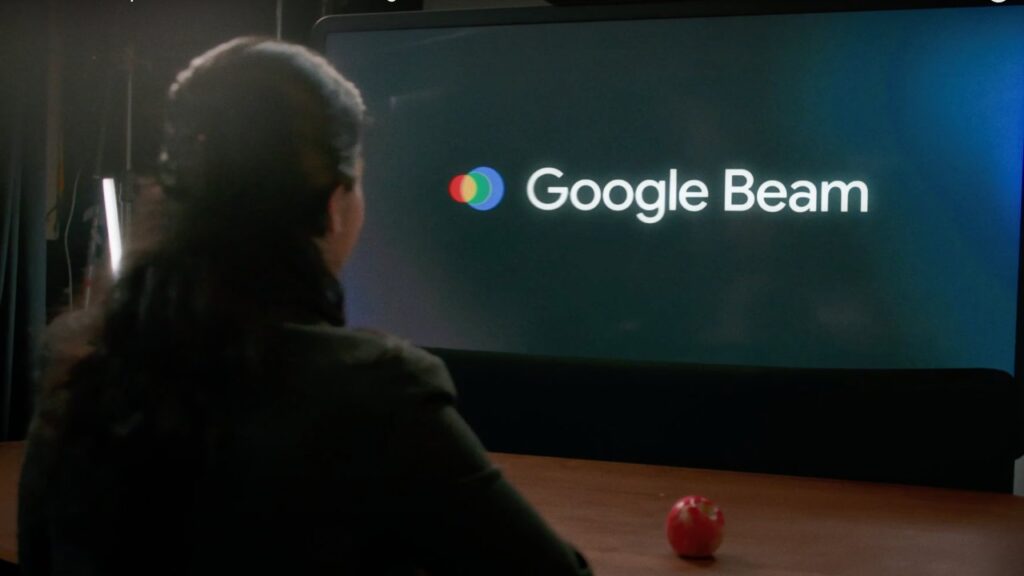
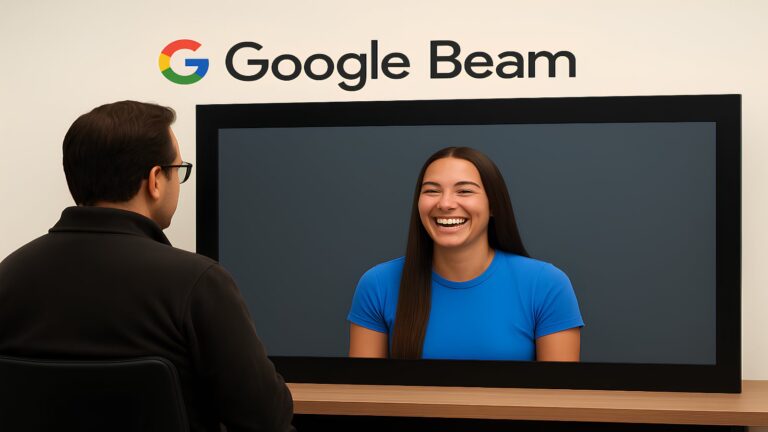
Google Beam is Google’s new AI-powered 3D video communication platform. Think of it as the next step in video calling — but way more real and lifelike.

It’s actually built from an earlier project called Project Starline, where Google tried to make remote conversations feel like in-person ones. Now, with Beam, they’ve turned that idea into something real — not just for labs, but for actual use.

When you’re on a Beam call, the person you’re speaking to appears in life-size 3D. Like they’re sitting right across from you. You don’t need a headset or goggles. Just look at the screen, and you’ll feel like you’re sharing the same space.

So if regular video calls feel flat or distant, Beam aims to make remote chats human again — with proper eye contact, body language, and presence.

How Google Beam AI Works (Simple Breakdown)

Okay, let’s break this down in the simplest way.

Every Beam device has a bunch of cameras (six in total) that record you from different angles. These camera feeds are then processed by a powerful AI model that builds a 3D version of you, in real-time.

This 3D model is shown on a special screen (called a light field display), which makes it look like the other person is sitting right in front of you — not on a screen, but in your space.

Here’s the fun part: the AI tracks your head movements at 60 frames per second. So if you move a little left or right, the image adjusts instantly, keeping the 3D illusion real.

This means:

  • You see the other person in 3D.
  • You can make real eye contact.
  • You pick up on small expressions, gestures, nods — all the natural stuff missing in Zoom calls.

It’s like FaceTime meets holograms — powered by serious AI.

Google Beam AI: The Secret Behind the Magic

Google calls this an AI-first platform, and here’s why that matters.

1. AI builds your 3D image in real time:

Beam uses AI to stitch together all the camera angles and make a 3D version of you. It doesn’t just show a video feed — it shows you in true depth, like you’re really there.

2. AI handles realistic rendering:

As you move, the AI updates how the 3D image looks based on your position. That’s why it feels so immersive.

3. AI enables real-time translation:

This is wild — during Beam calls, you can talk in English, and the person on the other end hears it in Spanish. The Beam AI translates your speech, keeps your voice tone, and even syncs your lip movement and expressions.

So yes, you’re talking across languages, but it still feels like a natural chat. Google showed this feature live at I/O 2025.

4. AI supports eye contact tracking:

Making eye contact on Zoom? Awkward. But Beam AI tracks exactly where your eyes are and adjusts the 3D image to match. So if someone looks at you, it really looks like they’re looking right into your eyes.

That’s not just cool — it’s game-changing for interviews, therapy, or any serious conversations.

Real-World Uses: Why Beam Actually Matters

Let’s talk about where this can be useful. Google Beam isn’t just a tech demo — it has real applications.

1. Business Meetings

Big companies like Deloitte and Salesforce are already testing Beam. Imagine remote team meetings where you actually feel present. Eye contact, gestures, natural conversation — all from different cities.

2. Cross-Language Conversations

Thanks to Beam AI’s live translation, language barriers can disappear. You speak in your language, they hear it in theirs. Smooth, real-time, no human interpreter needed.

3. Healthcare (Telemedicine)

A healthcare organisation called Hackensack Meridian is trying it out. Doctors can consult patients remotely but still feel like they’re in the same room. Super useful for trust, reading patient emotions, or doing therapy.

4. Education and Training

Duolingo is exploring Beam too. Language practice sessions or even full lessons could feel like sitting in a real classroom with your tutor, even if they’re 2,000 miles away.

5. Hiring & Interviews

A company called Recruit plans to use Beam for virtual interviews. It could make the hiring process feel much more personal and human.

Bottom line — anyone who values natural, face-to-face interaction will benefit from Beam. It’s not just about seeing someone. It’s about feeling present with them.

Is Google Beam a Device or an App?

Great question — and one many people are asking.

Google Beam is a device.

You won’t find it as an app to download on your phone or laptop. It’s real hardware, built in partnership with HP. Think of it like a futuristic video booth or console — with a big screen, cameras, sensors, and some serious tech inside.

That’s what makes it work:

  • It needs special cameras to capture you from all sides.
  • It needs a special screen to show you in 3D.
  • It connects to the cloud to do all the AI processing.

It’s not a regular webcam. It’s a full setup, meant for offices, meeting rooms, and high-value conversations.

Also, Beam is designed to work with tools like Zoom and Google Meet. So you don’t need to ditch your existing setup — it’ll fit right in.

In short:

  • It’s not an app.
  • It’s not a consumer gadget.
  • It’s a hardware + cloud platform for enterprises.

What About Cost and Release?

Right now, Google Beam is not something you can just go out and buy.

Here’s what we know:

  • Google will show the Beam device publicly at InfoComm 2025 (a tech conference happening between June 7-13).
  • Then, they’ll roll it out to select companies later in 2025.
  • Early partners include big names like Salesforce, Duolingo, Citadel, and more.

As for the price — Google hasn’t shared anything yet. But since it involves custom hardware, expect it to be expensive and enterprise-focused.

So, regular folks won’t get this at home anytime soon. But if it works well in business settings, maybe it’ll expand later.

FAQs: Quick Answers About Google Beam

1. Is Google Beam an app I can download?

No. Beam is a hardware-based platform, not a phone or computer app.

2. Do I need to wear glasses or VR headsets to use Beam?

Nope. Beam works without any headsets. You just sit in front of the device.

3. Will it work with Zoom or Google Meet?

Yes. Google said Beam will integrate with popular video platforms like Zoom and Meet.

4. Can I buy Google Beam device for home use?

Not yet. Right now, it’s for businesses. Google hasn’t announced anything for personal use.

5. Does Beam support language translation?

Yes! It can translate speech in real time — with the same voice and even synced expressions.

Final Thoughts

Google Beam is the kind of tech we’ve seen in sci-fi movies — and now, it’s becoming real. With life-size 3D visuals, real-time AI, live translations, and no weird glasses — Google Beam is aiming to change how we communicate forever.

If it lives up to its promise, this could be the future of remote work, interviews, healthcare, education, and so much more. For now, it’s starting with big companies. But who knows? In a few years, maybe we’ll all have a Beam at home.
KPMG 2025 Global Study: India Leads World in AI Adoption

0

KPMG recently released a detailed “Trust, attitudes and use of artificial intelligence: A global study 2025” report examining how people across 47 countries use Artificial Intelligence (AI). According to this report, India stands at the top, leading the entire world in adopting AI. This means people in India are using AI tools more frequently and comfortably than anywhere else. This post explains why India leads, what the situation looks like right now, and what it means for the future.

India at the Forefront of AI Usage

The KPMG report states clearly: a remarkable 92% of Indians regularly use AI. This figure is the highest among all countries surveyed. What does “regularly use AI” mean? It simply means people are intentionally using technology tools like voice assistants, chatbots like ChatGPT, image generators, and even personalized recommendations.

Why are these numbers significant? Because it shows AI is becoming normal and widely accepted in daily life in India. Unlike many countries, where people might be hesitant, Indians have embraced AI, using it at work, for studying, and even in their free time.

High Trust and Strong Skills Drive Adoption

Another reason why India leads in AI usage is trust. The report highlights that Indians have high confidence in AI. Around 76% of people are willing trust AI to make decisions or handle data. Moreover, an impressive 90% approve of the positive impacts AI brings, believing it genuinely improves their lives.

What builds this trust? One big factor is that people in India have good access to AI training. The report points out that 78% of people in India have had some form of AI education or training, either formal (like courses) or informal (like self-learning through online tutorials). Because of this training, 83% of Indians feel confident using AI tools. When people understand how something works, they naturally trust it more.

In workplaces across India, AI isn’t just a concept — it’s a valuable partner. KPMG’s survey shows two-thirds of employees already regularly use AI in their jobs. In fact, many employees admit they can’t complete some tasks without help from AI. This highlights how integral these tools have become to daily tasks, making workplaces more productive and efficient.

However, this doesn’t mean there aren’t worries. Many people remain concerned about possible risks, such as loss of human jobs or reduced personal interactions. But overall, the excitement and trust outweigh these fears significantly.

Why Is India Leading?

While KPMG highlights India’s top position in AI adoption, here are possible reasons behind this lead:

  • Solving Everyday Problems: AI helps fill gaps in education, healthcare, and public services. In rural areas, people use AI tools to access information or services they couldn’t reach otherwise—such as online tutoring or health advice apps.
  • Economic Growth and Opportunity: AI creates new jobs and boosts productivity. Indian startups and companies view AI as a way to grow faster and tap global markets, encouraging wider adoption.
  • Positive Attitude and Learning Environment: Many Indians are optimistic about technology. This positivity leads to more experimentation, which builds skills and boosts confidence in AI tools.
  • Supportive Institutions: Businesses and educational centers in India offer AI training and clear policies. This institutional support makes it easier and safer for people to try AI.

Plus, affordable smartphones, widespread internet access, and low data costs enable millions to explore AI easily.

Note: The data behind this report comes from a limited survey sample, so the findings should be seen as indicative rather than definitive.

10DollarJob Is the Upwork for AI Agents, and It Might Replace Freelancers

0

Bengaluru-based startup Prava, founded by Sushant Pandey and Shubham Kukreti, recently launched 10dollarjob.com. Positioned as an Upwork for AI agents, this innovative platform allows users to conveniently hire AI agents to perform complex, one-off tasks efficiently. The goal is simple: provide affordable, accessible AI-powered assistance without the overhead and complications that typically accompany human freelancers. Currently available for users on the waitlist, the platform has generated buzz for its intuitive interface and forward-looking approach.

What 10dollarjob.com Offers?

10dollarjob.com is designed to simplify getting work done by leveraging the power of AI. Users can quickly hire AI agents to handle tasks like writing articles, designing graphics, cleaning datasets, or even generating code snippets. This opens up a variety of use cases for businesses, freelancers, students, and startups. For instance, small businesses can quickly create marketing content without hiring expensive agencies. Developers and AI startups can monetize their AI agents by listing them on the marketplace, allowing wider adoption and additional revenue streams.

The platform’s straightforward pricing model eliminates confusion. Each job has a clearly stated cost, based on individual agent pricing, so users know exactly what they’re paying upfront. Payment flows smoothly through Prava’s integrated wallet, streamlining transactions for users and AI developers alike. This user-friendly approach makes it accessible even to non-technical individuals who simply want efficient and cost-effective outcomes.

How AI Agents Get Your Work Done?

At the core of 10dollarjob is an AI-powered orchestrator engine. Once a user submits a task description, the orchestrator analyzes the request and divides it into smaller subtasks. These subtasks are then assigned to specialized AI agents listed on the marketplace. Agents perform their assigned tasks individually and efficiently, with progress updates visible in real-time on the platform.

The orchestrator then collects and compiles results from each agent, ensuring the final output meets quality standards before delivery. Upon confirming a task, funds are secured in the user’s Prava wallet, with automatic payments released to agents once work is completed. This approach ensures transparency and accountability, as users can track the job’s status every step of the way. The entire process – from job submission to final delivery, is designed to be seamless and intuitive, requiring minimal intervention from the user.

Why 10dollarjob Could Be Your Next Go-to AI Marketplace

The relevance of 10dollarjob is clear in today’s fast-paced digital economy, where efficiency and cost-effectiveness are critical. Many businesses and individuals are eager to adopt AI solutions but face barriers like high costs, complexity, and lack of technical expertise. This platform directly addresses those issues, making AI capabilities accessible to a broader audience.

For small businesses, startups, and individual entrepreneurs, the platform provides an affordable way to handle tasks that might otherwise require expensive human freelancers or significant manual effort. For AI developers, it offers a unique opportunity to monetize their creations by reaching a wider customer base effortlessly.

Furthermore, with AI technology advancing quickly, platforms like 10dollarjob have a strong chance to grow in a rising market. The service focuses on practical tasks, matching current trends that value speed, low cost, and ease of use. As AI keeps developing, more people will likely use services like this, showing how 10dollarjob can play an important role in future work habits.

Hyperbots Just Raised $6.5M to Kill Manual Accounting Forever With AI

0

Finance automation startup Hyperbots has raised $6.5 million in a Series A round. The investment was co-led by Arkam Ventures and Athera Venture Partners, with participation from JSW Ventures, Kalaari Capital, Sunicon Ventures, and Darashaw & Company.

This funding will be used to build new AI products, expand in the U.S., and strengthen the company’s engineering team. For a company that started just in 2023, this shows serious momentum and investor confidence.

What Does Hyperbots Actually Do?

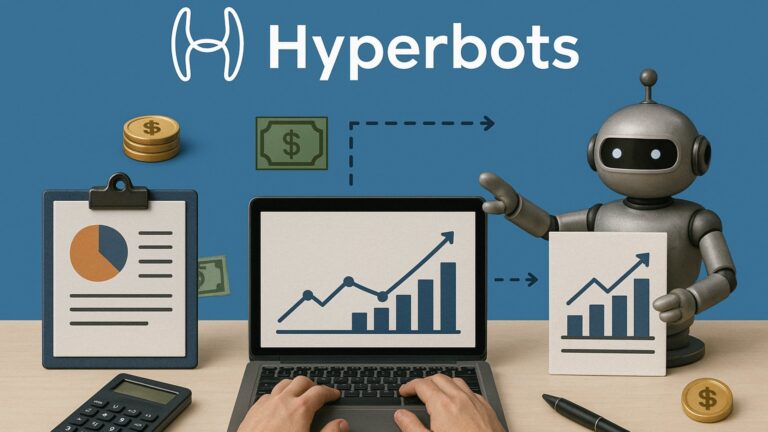
Hyperbots builds Agentic AI co-pilots for finance teams. These are smart tools that automate time-consuming accounting tasks. From reading invoices and matching payments to validating taxes and checking compliance — the bots handle it all.

Their platform plugs into existing systems like ERP and CRM software. It reads documents, pulls out key data, and processes everything automatically. No more boring data entry or late-night reconciliations.

The company claims its AI can deliver up to 99.8% accuracy and cut manual work by nearly 80%.

Behind the Tech: HyperLM and AI-Powered Workflows

One of Hyperbots’ biggest innovations is HyperLM — their own AI language model trained specifically on finance data. It understands accounting terms, financial reports, and tax logic better than generic AI models.

This makes the AI super reliable when it comes to financial work. It can complete processes end-to-end without human help — what they call straight-through processing.

Built with input from CFOs and accountants, the AI doesn’t just automate tasks. It understands how finance really works inside companies.

The Founders Behind Hyperbots’ Success

Hyperbots was founded by three industry experts:

  • Rajeev Pathak, CEO, who earlier led a $100 million business at Wipro.
  • Niyati Chhaya, VP of AI, a former Adobe scientist with a PhD in AI.
  • Ram Jayaraman, Head of Engineering, who previously built ed-tech platforms.

While the company is based in US (in Delaware), its tech muscle is powered from Bengaluru, India. So, with 55+ team members already, most of them engineers, the Indian tech hub is critical to Hyperbots’ success.

Why Hyperbots Matters in India and Beyond

Hyperbots is going after mid-sized enterprises, particularly in the U.S., who need finance automation but lack internal AI teams. But the tech is just as relevant in India, where businesses are scaling fast and can benefit from automation.

Globally, finance automation is booming. The market is expected to grow from $8 billion in 2024 to $18 billion by 2030. Hyperbots is stepping in at the right time, with the right product.

Moreover, their customer base already spans industries like healthcare, media, retail, and electric vehicles. And with this funding, they plan to cross 100 customers this year.

Indian Government Backs Sarvam AI to Build India’s Own ChatGPT

0

India has officially taken a major leap in artificial intelligence. Sarvam AI, a Bengaluru-based startup, has been selected by the Indian government to build the country’s first sovereign Large Language Model (LLM). This project, supported under the IndiaAI Mission, is a massive move toward building an AI system that truly understands India – its languages, culture, and people.

But what does this actually mean? Why is India taking a step towards developing their own LLM? And how will it impact everyday users, businesses, and the future of Indian AI? Let’s break it down in simple terms.

What Is Sarvam AI Doing with the Sovereign LLM?

The Indian government wants to create its own powerful AI model — just like ChatGPT or Google Gemini, but fully trained and operated in India, using Indian data and infrastructure. This AI model is known as a Large Language Model (LLM) — a type of artificial intelligence that can understand and generate human-like language.

On April 26, 2025, Sarvam AI was officially chosen to lead this mission. Out of 67 applicants, Sarvam stood out, and now they will be responsible for creating India’s own foundation model, a task that involves training the AI from scratch.

Why India Needs Its Own AI Model?

There are three big reasons:

  1. India’s language diversity
    India has 22 official languages and hundreds of dialects. People often speak in a mix of languages — like “Hinglish” (Hindi + English). Global AI models don’t always understand these combinations or local context. A model trained in and for India will be able to understand and respond in these languages naturally.
  2. Data sovereignty and privacy
    When we use foreign AI tools, our data often travels outside the country. That’s a concern for privacy and security. A sovereign Indian AI model will be hosted and operated within India, ensuring that sensitive user and government data stays in the country.
  3. Self-reliance in AI technology
    India wants to reduce dependency on foreign tech. Just like we build our own space missions or UPI for payments, we now want to build our own AI systems. This move supports the vision of an “Atmanirbhar Bharat” (self-reliant India).

What Kind of LLM Is Sarvam AI Building?

Sarvam plans to build three versions of its language model under the IndiaAI initiative:

  • Sarvam-Large: For deep, complex tasks using advanced reasoning — similar to ChatGPT-style AI.
  • Sarvam-Small: A lighter version for daily chat and interaction.
  • Sarvam-Edge: A version that can run directly on devices (like smartphones) without needing constant internet access.

These models will be trained to understand both text and voice, making them usable in apps, websites, phone calls, and smart devices. Importantly, they will be designed from scratch — not built on top of existing foreign models — using Indian datasets.

How Will Indian AI Infrastructure Power the Training?

Building such a model requires massive computing power. Sarvam AI will get access to 4,000 high-end GPUs (special chips needed to train AI models) for six months, thanks to the IndiaAI Mission. Companies like Jio Platforms, Yotta, and Tata Communications are providing the necessary hardware within India.

The Indian government is also helping cover cost and will take an equity stake in Sarvam AI — essentially becoming a partial owner of the project.

Sarvam will also work closely with AI4Bharat, a research team from IIT Madras, to ensure that Indian languages and dialects are properly represented.

Will Sarvam’s Sovereign AI Model Be Open for Everyone?

This has become a topic of debate. While Sarvam AI has previously released open-source AI models (like one called Shuka), the new sovereign LLM will most likely not be open-source. That means the full model won’t be freely available to everyone.

However, developers, startups, and companies will get API access — a way to use the model in their apps or services. This approach helps protect India’s AI knowledge and encourages responsible use.

How Will Sarvam AI’s LLM Impact Everyday Indians?

You might be wondering — how does this affect you?

  • Better AI in Indian languages: Think of voice assistants, customer support bots, or apps that truly understand your language, accent, and context — be it in Hindi, Tamil, Telugu, Marathi, or Bengali.
  • Stronger privacy and security: Your data will stay within Indian borders, and be handled under Indian laws, offering more trust in how it’s used.
  • AI-powered services for all: From government helplines to agriculture support or healthcare advice — Indian AI systems can now reach more people in their own language and with more accuracy.

The Future of Indian AI: What Comes Next

The Sarvam AI’s LLMs could become part of India’s digital public infrastructure, helping systems like Aadhaar or DigiLocker become even smarter with natural language interfaces.

Sarvam has a few months to build and launch this model. It’s a tough task — training a high-quality LLM is expensive, time-consuming, and highly complex. But it’s also a historic opportunity.

If successful, this project won’t just be about tech. It will be about how India builds AI for Indians — using its talent, its languages, and its people, and takes its place in the global AI landscape.

10 Indian Startups Transforming Healthcare with AI (2025)

AI healthcare startups India are driving the transformation of the country’s healthcare sector, making it smarter and more accessible. From early disease detection to faster, more accurate diagnostics, AI is tackling some of India’s biggest health challenges. But which startups are at the forefront of this change? Which companies are using AI to save lives and improve healthcare, even in remote areas? Here’s a list of 10 AI healthcare startups in India that you might not have heard of!

10. AarogyaAI

Two founders of Indian healthcare AI startup

Founded: 2019

Founders: Praapti Jayaswal and Avlokita Tiwari

Based in: New Delhi

Problem They’re Solving:

  • Drug-Resistant Tuberculosis (DR-TB) is a major health crisis, especially in India which bears 1/3rd of the world’s TB burden.
  • Current diagnostic methods are slow, expensive, and often too late to guide effective treatment.

Solution:

  • AarogyaAI’s tool, AAICare, leverages AI + Genomics for a rapid, precise diagnosis of drug-resistant infections.
  • This ensures faster detection and tailored treatment, cutting down the guesswork in prescribing antibiotics.

Key Features:

FeatureHow It Helps
Microbial Diversity AnalysisDetects multiple pathogens (bacteria, viruses, fungi) for accurate diagnosis.
Drug Susceptibility ReportsIdentifies which drugs the infection is resistant to, guiding personalized treatment.
Infectious Disease SurveillanceTracks how infections evolve, helping doctors stay ahead of emerging drug-resistant strains.

How is it helpful?

  • Speeds up diagnosis from weeks to hours.
  • Prevents the spread of drug-resistant infections.
  • Helps doctors plan for future outbreaks by tracking pathogen evolution.

Visit the official website here: AarogyaAI

9. Endimension Technology

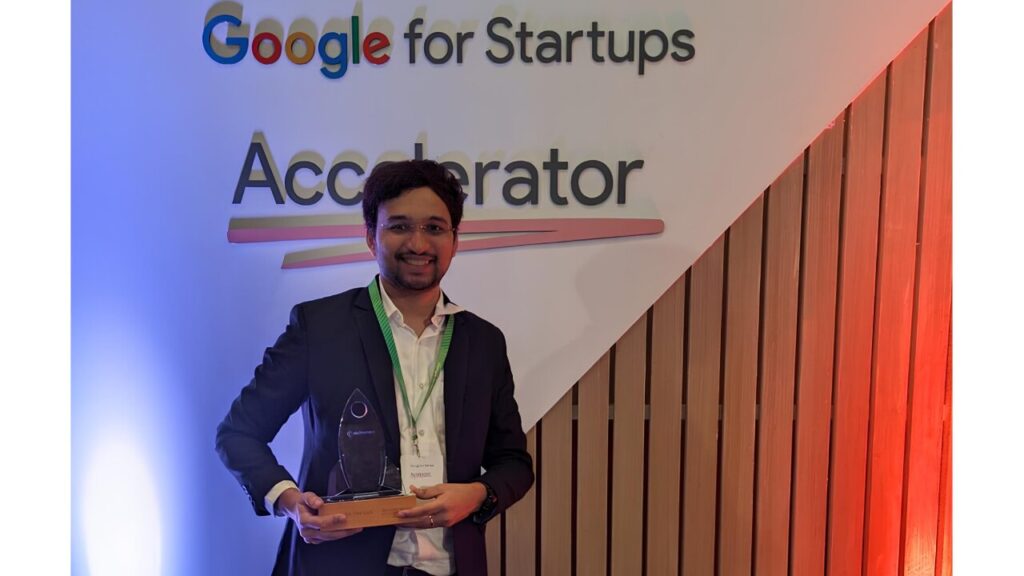
Founder of Endimension Technology holding an award

Founded: 2018

Founders: Bharadwaj Kss and Apparao MLV

Based in: Mumbai

Problem They’re Solving:

  • Radiologists are often overwhelmed with high volumes of medical images (like X-rays, CT scans, MRIs), leading to delayed and sometimes inaccurate diagnoses.
  • Access to expert radiologists is limited, especially in rural areas.

Solution:

  • Endimension uses AI-powered algorithms to assist radiologists by quickly analyzing medical images, identifying abnormalities, and providing fast, accurate insights.
  • Their AI acts as a “second pair of eyes” for doctors, ensuring no detail is missed.

Key Features:

FeatureHow It Helps
AI-Powered Image AnalysisDetects abnormalities like tumors, fractures, and other diseases with high precision.
Fast ResultsSpeeds up diagnosis time, helping doctors make quicker treatment decisions.
Remote AccessEnables doctors in rural areas to access advanced diagnostic tools without needing an in-house radiologist.

How is it helpful?

  • Increases diagnostic accuracy, reducing the chance of missed conditions.
  • Shortens waiting times for patients, improving overall healthcare outcomes.
  • Expands access to specialized radiology even in underserved areas.

Visit the official website here: Endimension Technology

8. Dozee

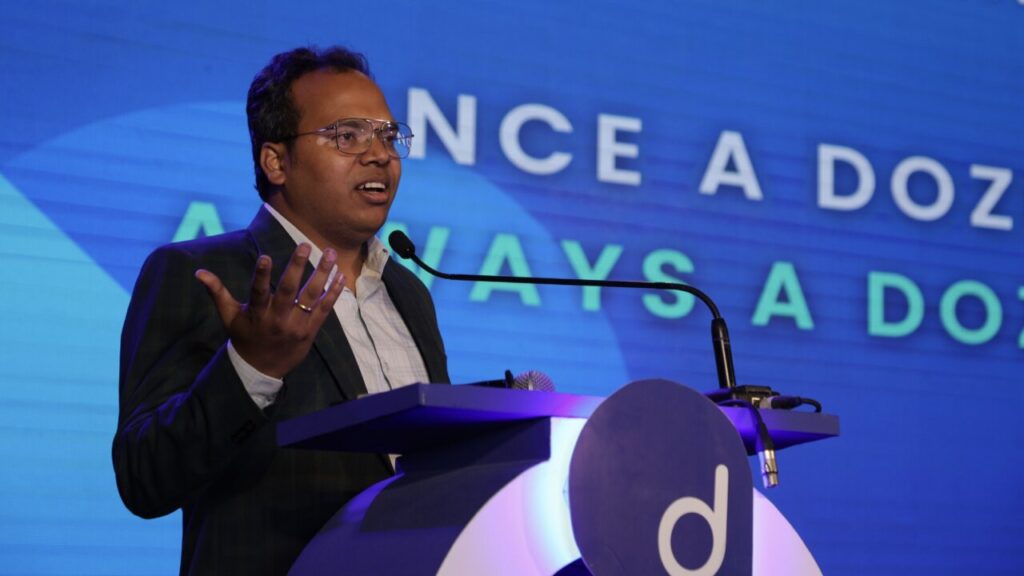
Founder of an Indian Startup speaking on microphone

Founded: 2015

Founders: Mudit Dandwate and Gaurav Parchani

Based in: Bengaluru

Problem They’re Solving:

  • Hospitals often struggle with limited staff to monitor patients 24/7, especially in ICUs and for chronically ill or elderly patients at home.
  • Traditional monitoring devices are uncomfortable, intrusive, and expensive.

Solution:

  • Dozee is one of the leading AI healthcare startups of India that offers a contactless health monitoring system that tracks vital signs like heart rate, respiration, and sleep patterns using a sensor placed under the mattress.
  • Their AI-powered platform provides real-time alerts for early detection of health issues, enabling doctors and caregivers to take quick action.

Key Features:

FeatureHow It Helps
Contactless MonitoringNo wires or discomfort – sensor sits under the mattress for seamless patient tracking.
AI-Driven AlertsDetects abnormal vital signs and alerts healthcare providers instantly.
Early Detection of IssuesHelps catch potential health complications before they escalate, improving outcomes.

How is it helpful?

  • Enables 24/7 patient monitoring without the need for constant manual checks.
  • Ideal for ICU patients, elderly care, and at-home monitoring.
  • Reduces hospital visits and ensures early interventions, lowering the risk of emergencies.

Visit the official website here: Dozee

7. Predible Health (nference)

Two Indian founders of Healthcare AI startup

Founded: 2016

Founders: Murali Aravamudan and Venky Soundararajan

Based in: Bengaluru

Problem They’re Solving:

  • Healthcare data is mostly unstructured and hard to use for actionable insights. This makes it difficult for doctors and researchers to harness the full potential of patient information for better diagnosis and treatment.

Solution:

  • Predible Health (now part of nference) converts messy, unstructured medical data into structured, usable information through advanced AI and data processing techniques. They help hospitals and researchers unlock valuable insights from electronic medical records (EMR) to tackle healthcare’s biggest challenges.

Key Features:

FeatureHow It Helps
DeidentificationProtects patient privacy by ensuring sensitive data never leaves healthcare centers.
Data Creation (Pathology & Sequencing)Digitizes physical pathology slides and performs comprehensive genetic sequencing to aid AI-based disease detection.
Augmented CurationTransforms messy, unstructured clinical notes into structured data for easier analysis.
Data HarmonizationUnifies inconsistent medical data into standardized formats for reliable use in downstream AI models.
Triangulation of DataCombines EMR data with public databases (clinical trials, biomedical literature) for deeper insights.
Secure Compute SolutionsProvides high-performance, secure data storage for healthcare data processing.

How is it helpful?

  • Improves early disease detection using AI.
  • Enables personalized treatments by generating rich insights from previously untapped data.
  • Ensures patient privacy while extracting valuable clinical insights from sensitive data.

Visit the official website here: nference

6. Synapsica

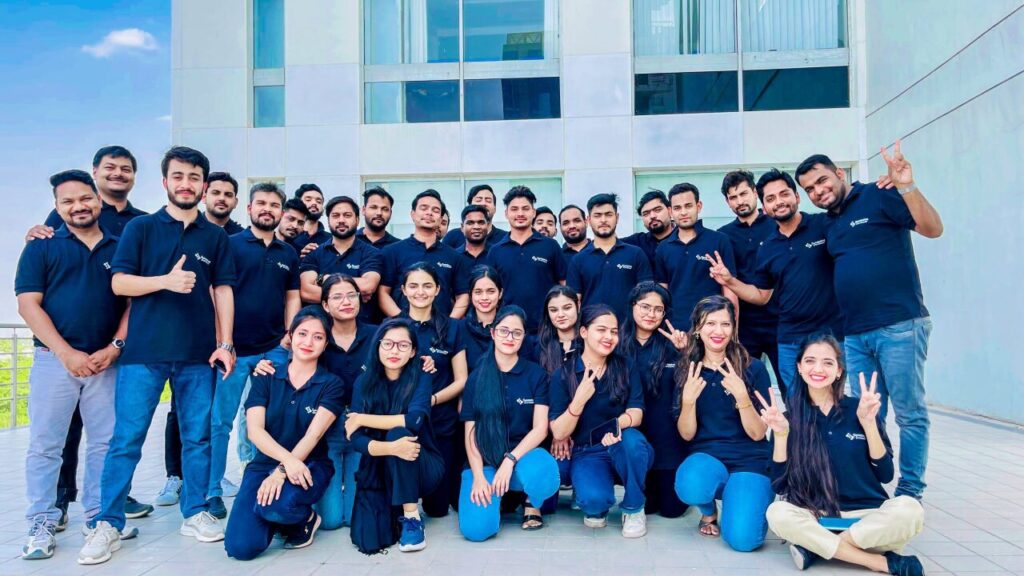
Synapsica employees in a group photo

Founded: 2018

Founders: Meenakshi Singh, Dr Cherian and Kuldeep Singh Chauhan

Based in: New Delhi

Problem They’re Solving:

  • Radiologists face overwhelming workloads due to the growing demand for medical imaging.
  • This often leads to delays, reporting errors, and less time for detailed analysis.

Solution:

  • Synapsica uses AI-powered tools to automate repetitive tasks in spine radiology, speeding up the process and improving accuracy.
  • Their AI assistant, Spindle, helps radiologists analyze spine MRIs and X-rays, generating highly detailed, evidence-based reports.

Key Features:

FeatureHow It Helps
AI-Driven Spine ReportingAutomates report generation with accurate measurements of spine conditions.
Predictive AnalyticsFlags early signs of spine degeneration, enabling proactive diagnosis.
Platform IndependentWorks across different platforms with seamless integration or cloud support.
Quantitative & Qualitative InsightsProvides both visual and data-driven reports, aiding more confident decision-making.
High AccuracyDelivers up to 99% accuracy in spine assessments, reducing errors.

How is it helpful?

  • Faster reporting: AI reduces time spent on repetitive tasks, allowing radiologists to focus on complex cases.
  • Improves diagnosis: Early detection of spine issues ensures timely treatment.
  • Accessible: Works across different platforms and can be used even in areas with fewer radiologists.

Visit the official website here: Synapsica

5. Niramai

Women founder of an Indian AI startup

Founded: 2016

Founders: Geetha Manjunath and Nidhi Mathur

Based in: Bengaluru

Problem They’re Solving:

  • Breast cancer is the leading cause of cancer deaths among women in India.
  • Traditional screening methods like mammography are expensive, uncomfortable, and often unavailable in remote areas.

Solution:

  • Niramai’s technology uses AI-powered thermal imaging to detect early-stage breast cancer.
  • This method is radiation-free, non-invasive, and affordable, making screening accessible to more women, especially in underserved regions.

Key Features:

FeatureHow It Helps
Thermal ImagingUses heat mapping to detect cancer without radiation or physical discomfort.
AI-Powered AnalysisAI algorithms identify cancerous patterns that may not be visible in traditional scans.
Portable & AffordableCan be deployed in rural areas, making breast cancer screening accessible and cost-effective.

How is it helpful?

  • Detects cancer at an early stage when treatment is more effective.
  • Provides a safer, more comfortable screening option for women.
  • Increases access to breast cancer screening, especially in low-resource settings.

Visit the official website here: AarogyaAI

4. Artelus

Photo of Pradeep Walia l Founder of Artelus

Founded: 2015

Founders: Pradeep Walia, Raja Rajeshwari and Lalit Pant

Based in: Bengaluru

Problem They’re Solving:

  • Diabetic Retinopathy is a leading cause of blindness, particularly in diabetic patients.
  • The lack of early detection leads to preventable vision loss, especially in regions with limited access to eye specialists.

Solution:

  • Artelus has developed an AI-powered screening tool that quickly and accurately detects diabetic retinopathy from eye scans.
  • This tool enables early detection, making it possible to treat the condition before vision is lost.

Key Features:

FeatureHow It Helps
AI-Driven Retinal Scan AnalysisAnalyzes eye images to detect diabetic retinopathy in its earliest stages.
Rapid ScreeningProvides fast, accurate results without the need for a specialist on-site.
Accessible in Low-Resource AreasCan be used in remote or underserved locations, where eye care is hard to find.

How is it helpful?

  • Prevents blindness by catching the disease early.
  • Affordable and scalable, making it ideal for mass screenings in hospitals or rural clinics.
  • Reduces dependency on specialists, allowing broader access to care.

Visit the official website here: Artelus

3. SigTuple

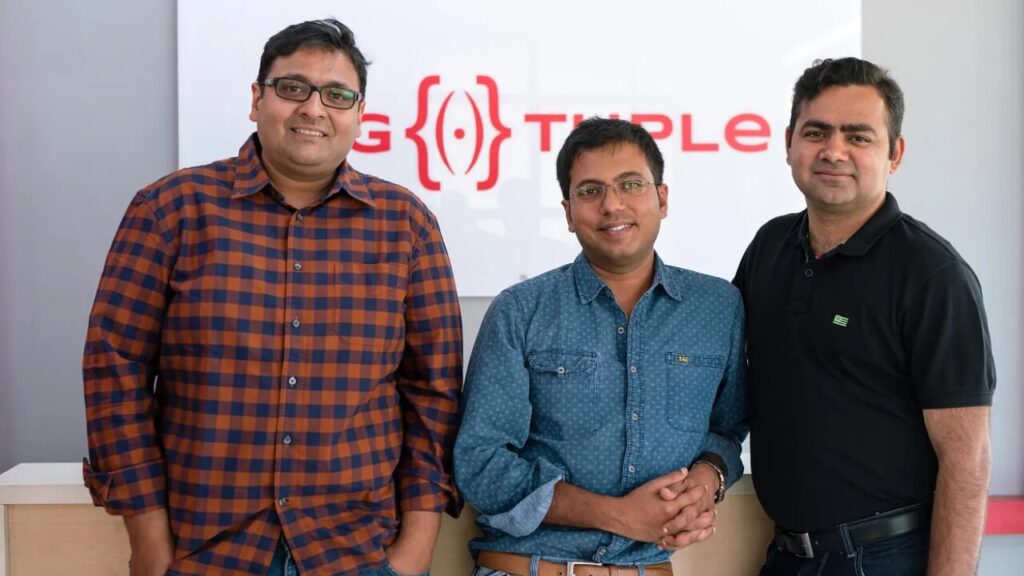
The founders of Indian AI Healthcare startup "SigTuple"

Founded: 2015

Founders: Tathagato Rai Dastidar, Apurv Anand, and Rohit Mishra

Based in: Bengaluru

Problem They’re Solving:

  • Manual diagnostics like blood smear analysis and pathology tests are time-consuming, labor-intensive, and prone to human error.
  • There is a shortage of skilled pathologists, leading to delays in diagnosis, especially in smaller hospitals or remote areas.

Solution:

  • SigTuple’s platform uses AI and computer vision to automate the analysis of medical data (e.g., blood smears, urine samples, X-rays).
  • Their AI-powered tools quickly process samples and generate automated reports, reducing the burden on human pathologists.

Key Features:

FeatureHow It Helps
AI-Powered Blood Cell AnalysisAutomatically detects and classifies blood cells, speeding up blood test results.
Urine and X-ray AnalysisScans and interprets other medical data, offering more accurate diagnostics.
Automated ReportingGenerates ready-to-use medical reports, saving time for doctors and pathologists.

How is it helpful?

  • Faster results mean quicker treatment decisions for patients.
  • Helps hospitals in remote areas or smaller labs handle more diagnostics with fewer pathologists.
  • Reduces human error, making diagnostics more reliable and consistent.

Visit the official website here: SigTuple

2. Tricog Health

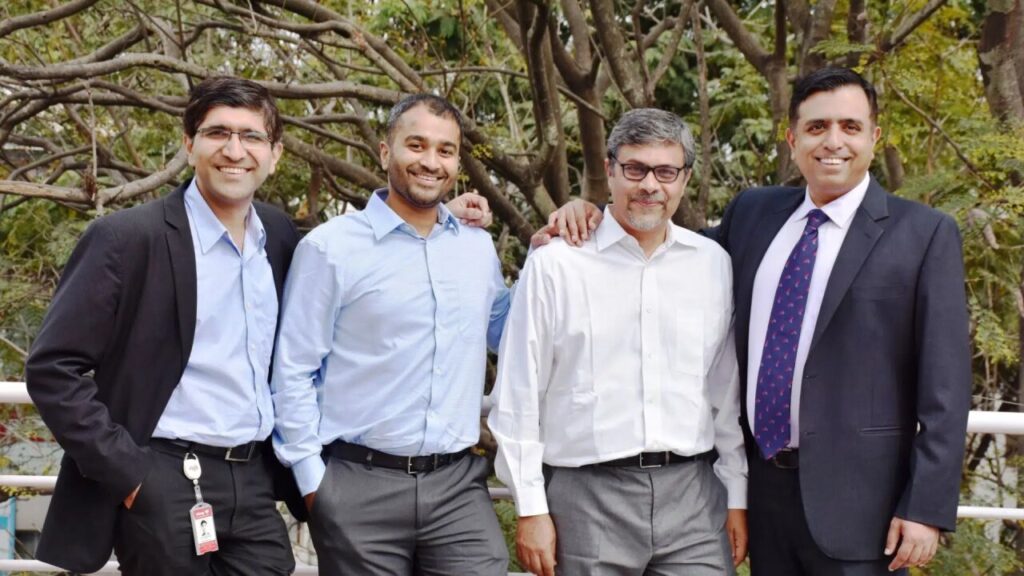
Founders of Tricog Health posing for a photoshoot

Founded: 2014

Founders: Dr. Charit Bhograj, Dr. Zainul Charbiwala and Dr. Udayan Dasgupta

Based in: Bengaluru

Problem They’re Solving:

  • Heart attacks need immediate diagnosis and treatment, but many patients in remote areas don’t have access to timely cardiac care.
  • Delay in diagnosing heart conditions often leads to fatal outcomes.

Solution:

  • Tricog Health’s AI platform, InstaECG, provides real-time interpretation of ECGs (electrocardiograms), enabling instant diagnosis of heart attacks even in remote clinics without cardiologists.
  • This allows healthcare providers to make quick, life-saving decisions.

Key Features:

FeatureHow It Helps
Instant ECG AnalysisProvides real-time, AI-driven interpretation of ECGs within minutes.
Remote DiagnosisConnects rural or small clinics to top cardiologists, closing the access gap.
24/7 AI AssistanceContinuous AI monitoring ensures patients get timely diagnosis around the clock.

How is it helpful?

  • Saves lives by enabling faster treatment for heart attack patients.
  • Brings expert care to rural or under-served areas without access to specialists.
  • Reduces the risk of fatal outcomes through instant, reliable ECG analysis.

Visit the official website here: Tricog Health

1. Qure.ai

Founder of Qureai

Founded: 2016

Founders: Prashant Warier

Based in: Mumbai

Problem They’re Solving:

  • Access to timely and accurate radiology diagnostics is limited, especially in underserved areas.
  • Radiologists are overburdened, leading to delays in diagnosing critical conditions like tuberculosis, lung diseases, strokes, and head injuries.

Solution:

  • Qure.ai’s AI-powered tools, like qXR and qER, analyze X-rays and CT scans to detect various diseases in seconds.
  • Their AI solutions help doctors quickly identify life-threatening conditions, even in places with limited access to expert radiologists.

Key Features:

FeatureHow It Helps
Chest X-ray Analysis (qXR)Detects TB, pneumonia, and lung cancer, offering quick diagnosis in remote areas.
Automated ReportsGenerates radiology reports instantly, speeding up patient care.

How is it helpful?

  • Reduces diagnostic time from days to seconds, critical for emergency cases.
  • Helps in areas with few radiologists, improving access to high-quality healthcare.
  • Enables early detection of diseases, potentially saving lives by ensuring faster treatments.

Visit the official website here: Qure.ai

So, how do you think AI startups will shape the future of healthcare in India? Also, which of these startups do you find most groundbreaking? Share in the comment section below!

Circadian AI App by Siddharth Nandyala: Detecting Heart Disease in Seconds

0

Circadian AI App is an artificial intelligence-driven innovation created by 14-year-old Siddharth Nandyala. It’s an app that can detect heart disease in a matter of seconds by analyzing heart sounds. This remarkable capability has been making headlines around the world. Even government leaders have taken notice — the Chief Minister of Andhra Pradesh praised Circadian AI as a medical breakthrough that makes detecting heart problems easier and faster than ever before. The buzz around this invention comes not only from its lifesaving potential but also from the inspiring fact that its developer is a teenager. Siddharth’s achievement showcases how youthful ingenuity and modern technology can combine to solve real-world health challenges.

How Circadian AI Works?

Circadian AI App works by listening to a person’s heartbeat and using a trained AI algorithm to spot warning signs of heart disease. In simple terms, the app uses a smartphone’s microphone like a digital stethoscope to record heart sounds, then analyzes those sounds for any irregular patterns or anomalies. Behind the scenes, the AI model has learned from thousands of heart sound samples – some from healthy hearts and some from patients with heart conditions. By learning these patterns, the AI can quickly recognize when a new heart recording doesn’t sound normal.

This process is incredibly fast and efficient. The AI can deliver a result in as little as seven seconds, alerting the user if it detects signs of a possible heart problem. Despite the quick analysis, the app of Circadian AI has proven to be highly accurate. In tests, it achieved over 96% accuracy in identifying cardiac issues. Such accuracy was established by trials involving more than 15,000 patients in the United States and around 700 patients in India. In each case, the app analyzed the heart sound recordings and successfully flagged conditions with reliability comparable to traditional medical exams.

In summary, Circadian AI functions like a smart digital doctor: it listens to your heart, compares the sound to what it has learned about unhealthy versus healthy heart rhythms, and then quickly tells you if there might be a concern. This use of artificial intelligence for early heart disease detection could revolutionize how we approach cardiac healthcare, making check-ups faster and more accessible for everyone.

The Founder of Circadian AI App: Siddharth Nandyala

Siddharth Nandyala, the creator of Circadian AI, is a 14-year-old tech prodigy originally from the Anantapur district in Andhra Pradesh, India. His family moved to the United States in 2010, and he now lives in Frisco, Texas. From a young age, Siddharth showed an extraordinary passion for technology and science.

Despite his youth, Siddharth’s list of achievements is impressive. He has won awards such as the Innovator of the Year from the Frisco Chamber of Commerce in Texas and has even been recognized by the U.S. House of Representatives for his contributions to technology and innovation. In 2023, he was invited to showcase his work at the Global AI Summit in Hyderabad, India, where he presented Circadian AI to an international audience. Leaders and experts who have met him often remark that age is just a number when it comes to Siddharth’s talent and dedication. Andhra Pradesh’s Chief Minister noted that Siddharth is an inspiration, calling him “the world’s youngest AI-certified professional” and applauding how he is using technology for the benefit of humankind.

Beyond developing cutting-edge AI applications, Siddharth is also deeply committed to STEM education and empowering other young learners. He is the founder and CEO of an educational initiative called STEM-IT Tech, which is a platform dedicated to making science, technology, engineering, and math learning more accessible and engaging for students. Through STEM-IT Tech, Siddharth organizes programs and courses that teach coding, robotics, and AI to kids and teens around the world.

How to Download the Circadian AI App?

If you’re excited to try Circadian AI for yourself, you might wonder how to get this app. The honest answer is: you can’t download it just yet. As of now, Circadian AI is not publicly available on any app marketplace. It isn’t listed on the Google Play Store for Android or Apple’s App Store for iPhones. The app is currently in a testing and development phase, where it has been used in clinical trials and demonstrations but not released for general public use. So if you search for the application in the app stores right now, you won’t find Siddharth Nandyala’s Circadian app – and that’s expected at this stage.

According to Siddharth (the app’s founder), the plan is to launch it in a phased manner. A web version of Circadian AI has already been released, but it is currently restricted to hospital staff access only. There are no plans yet to make this web version publicly available. After this institutional rollout, the longer-term goal is to develop dedicated mobile apps for platforms like the Apple App Store and Google Play Store to bring the technology to a wider audience. However, no official timeline or public release dates have been announced.

For official updates on the Circadian AI app’s release, interested users should keep an eye on news announcements and any channels where Siddharth might post updates. Right now, the best source of information has been media coverage and Siddharth’s own statements. Once the app passes its current testing phase, more information on how to access the web app and, later, download the mobile app for Circadian AI will be made public.

How to Use Circadian AI?

When Circadian AI does become available to the public, it is expected to be very simple to use, even for people who aren’t tech-savvy. The entire idea behind the app is to make heart disease screening as easy as checking your email. Although exact user instructions will be provided upon launch, we can outline how it will likely work based on the information available.

Using Circadian AI App will probably go something like this:

  • Open the app (or web application) on your smartphone.
  • Place your phone’s microphone near your chest to record your heartbeat.
  • Tap a button to capture the heart sound.
  • The AI will analyze the recording within seconds and display the results.

One of the biggest benefits of Circadian AI is how accessible it makes heart health monitoring. Because it only requires a smartphone, people in remote or underserved areas could use it to get an initial heart screening without needing to travel to a specialist. This early warning can literally save lives by prompting timely medical intervention.

Overall, using Circadian AI will involve just a few simple steps on a smartphone: recording your heartbeat and letting the AI analyze it. With innovations like the application of Circadian AI on the horizon, heart disease detection could soon be as straightforward as a daily health check on your phone. This will make preventative healthcare more accessible than ever before.

IIT Ropar Minor in AI: Fees, Syllabus, & All You Need to Know

0

Artificial Intelligence (AI) is all the rage right now. From chatbots to self-driving cars, it’s everywhere. And guess what? IIT Ropar has launched a Minor in AI program that’ll help you dive straight into this exciting field. So, whether you’re just starting out or already curious about AI, this course has got you covered.

Let me break it all down for you — step by step, super simple, and easy to understand.

What Is IIT Ropar’s Minor in AI Program?

This is a 9-month part-time course designed to give you hands-on skills in AI. The program covers the basics (like Python and Data Science) and moves on to advanced stuff (like Neural Networks and Robotics). You’ll learn through live classes, recorded lectures, and real-world projects — all taught by IIT Ropar’s experienced faculty.

Sounds good? Let’s move on.

Key Program Highlights

Here are some quick facts about the program:

  • Duration: 9 months (with a 1-month break in between).
  • Classes: Live online sessions (with recordings available later).
  • Structure: Two semesters + one capstone project.
  • Eligibility: You just need to pass 12th and clear a qualifier test.
  • Attendance: You gotta attend at least 70% of the live sessions.

Eligibility and Requirements

If you’re wondering if you can join, here’s what you need:

RequirementDetails
Qualification12th pass (any stream).
Qualifier ExamPass the entrance test by IIT Ropar.
Laptop NeededYes, with basic specifications (listed below).

Laptop Requirements

  • Minimum: 1.6 GHz processor, 4 GB RAM, and 120 GB storage.
  • Recommended: 2 GHz processor, 8 GB RAM, and SSD storage.

Program Structure

The program is spread over two semesters with distinct areas of focus. A capstone project at the end ensures practical, real-world exposure.

Semester 1: Foundation

Topics CoveredDetails
Aptitude & Mathematics FundamentalsFocuses on key mathematical concepts and reasoning skills for AI studies.
Programming RefresherQuick brush-up on Python and its applications in AI and data science.
Introduction to Prompt ProgrammingLearn to work effectively with AI models using prompts.
Data HandlingTechniques to manage, process, and analyze data with various tools.

Semester 2: Core Topics & Specialisations

Topics CoveredDetails
Core TopicsNeural Networks, Computer Vision, and Natural Language Processing.
Specialisations (Choose Any 2)– Mechanics: Advanced mathematical concepts.
– tinyML: Deploying ML on microcontrollers.
– IoT: Combining AI and IoT.
– Robotics: AI in robot design and control.
– General AI Applications: Broad AI use cases in industries.

Capstone Project

The program concludes with a project where students apply their learning. Example projects include:

  • AI in Film Editing: AI tools for video editing.
  • Language Translation: AI-powered translation systems.
  • Content Recommendation: Systems to recommend personalized content.
  • AI in Personalized Learning: Tailored educational AI systems.

Fees Structure

The program is affordable, and you can choose to pay upfront or through EMIs. Here’s how much it’ll cost:

Fee ComponentUpfront PaymentEMI Plan
Qualifier Exam Fee₹99₹99
Secure Seat Fee₹4,000₹4,000
Remaining Course Fee₹56,000₹8,400 x 8 months
Total Cost₹60,099₹71,299

How It All Works

Here’s how your learning journey will go:

  1. Live Classes: 3 hours on weekday evenings and Saturdays.
  2. Self-Learning: 8–10 hours of study per week.
  3. Attendance: At least 70% attendance is required.
  4. Exams: Offline exams at the end of each semester.

And yes, if you miss a live session, don’t worry—recordings are available.

What Will You Learn?

Let’s make this even simpler:

What You LearnDetails
BasicsMath, Python, Data Handling.
Core AI TopicsNeural Networks, NLP, Computer Vision.
SpecialisationsIoT, Robotics, tinyML, or General AI uses.
ProjectsBuild cool stuff like translators or recommender systems.

Why Choose This Program?

Here’s why this program is a solid pick:

  • Learn from IIT Faculty: Yep, live sessions by IIT Ropar professors.
  • Hands-On Projects: Work on real-world AI applications.
  • Flexible Learning: Live + recorded sessions to fit your schedule.
  • Affordable Fees: Payment plans to suit your budget.
  • AI Network: Be part of IIT Ropar’s AI/ML community.

How to Enroll?

Joining is super easy. Just follow these steps:

  1. Check Eligibility: 12th pass? Check. Got a laptop? Check.
  2. Register: Sign up and pay ₹99 for the qualifier test.
  3. Secure Your Spot: Once you pass, pay ₹4,000 to lock your seat.
  4. Pay the Fees: Either upfront or via EMIs.
  5. Start Learning: Begin your classes and get closer to mastering AI.

For more you can visit the official website of IIT Ropar here.

So, what do you think about this course? Share in the comment section below!

IIT Jodhpur B.Sc / B.S in Applied AI and Data Science: Everything You Need to Know

0

Artificial Intelligence and Data Science are changing the way the world works-from businesses to healthcare. In this growing need for professionals, the IIT Jodhpur has introduced something unique by launching a B.Sc / B.S in Applied AI and Data Science program. Pursue high-quality skills in AI and data science while getting a degree from IIT, all without having to clear the JEE exam? Want to know how this program can open doors to exciting careers? Let’s dive in!


Why Study AI and Data Science?

AI and data science are rapidly growing fields. In fact, the AI market is expected to be worth $267 billion by 2027. Many industries are adopting AI to improve efficiency and accuracy, opening up exciting job opportunities.

Quick Stats

  • 75% of businesses could fall behind if they don’t adopt AI (McKinsey).
  • AI is already reducing costs in healthcare by 30% and cutting diagnostic errors by 50%.

Learning AI and data science today will ensure you’re prepared for the future job market.


Program Overview

The B.Sc / B.S in Applied AI and Data Science at IIT Jodhpur, in collaboration with Futurense Uni, offers flexibility, a world-class curriculum, and a direct pathway to prestigious master’s programs—all without the need to clear traditional entrance exams like JEE.

Key Highlights:

FeatureDetails
Degree OptionsCertification (Year 1), Diploma (Year 2), B.Sc (Year 3), B.S (Year 4)
Flexible LearningOnline lectures with live weekend sessions and an annual on-campus immersion
No JEE RequiredAdmission based on a qualifying test, application form, and offer letter
Industry-Relevant CurriculumLearn from top IIT faculty and industry leaders with practical, hands-on learning
Direct Pathway to Master’sAdmission to master’s programs at IIT Jodhpur and top U.S. universities without exams

Who Can Apply?

The course is open to all age groups. As long as one meets the eligibility criteria and requirements, whether coming fresh from school or already in employment, one can join this course.

Eligibility Criteria:

CategoryRequirements
12th Pass-OutsMinimum 60% in +2 Board exams (with Mathematics as a subject)
Dual Degree AspirantsPursue this alongside another degree
Working ProfessionalsIdeal for those wanting to upskill and pivot into AI or data science

Unique Features and Benefits of the Course

1. Flexible, Stackable Degree Structure

The program allows you to earn credentials step by step. You can choose to exit the program after any year and still receive a recognized qualification.

YearQualification Earned
1Certification in AI and Data Science
2Diploma in AI and Data Science
3B.Sc Degree in Applied AI and Data Science
4Optional B.S Degree (Bachelor of Science)

This flexibility is ideal for both students and working professionals, giving you the chance to earn a degree that fits your timeline.

2. Blended Learning Model

The program combines online learning (with video lectures and quizzes) and live weekend sessions led by IIT faculty and industry experts. This means you can study at your own pace while still receiving guidance from experienced professionals.

Additionally, there is an annual on-campus immersion at IIT Jodhpur, where you’ll participate in hands-on learning and networking opportunities.

3. No JEE or JAM Required

Unlike traditional IIT programs that require students to clear entrance exams like JEE or JAM, this program has a simpler admission process:

  • Pass a qualifying test.
  • Submit a completed application form.
  • Receive an offer letter from IIT Jodhpur.

This opens up opportunities for a wider group of students and professionals to earn an IIT degree.

4. Industry-Driven Curriculum

The curriculum is designed to meet current industry demands, making sure you learn the skills needed in the job market. You’ll also participate in masterclasses by leaders from top companies like Google, Meta, and Microsoft.

Courses range from foundational topics like Linear Algebra and Statistics to advanced topics like Generative AI, Machine Learning, and Natural Language Processing.


Curriculum Breakdown: A Year-by-Year Look

Let’s take a closer look at what you’ll learn throughout the four years.

Year 1: Foundations in AI and Data Science

Course NamesSkills DevelopedJob Roles (Outcome)
Linear Algebra and Numerical AnalysisData Analysis, Problem SolvingAI-Powered Office Assistant
Foundations of Statistics and ProbabilityStatistical ModelingData and Research Analyst
Algorithmic Thinking and ApplicationsProgramming, Problem SolvingJunior Business Analyst
Basics of Data AnalyticsData Visualization

Outcome: After the first year, you will have a solid foundation in AI and data science. You can start working as a Junior Business Analyst or continue to Year 2.

Year 2: Advancing Your AI Skills

Course NamesSkills DevelopedJob Roles (Outcome)
Machine LearningMachine Learning Algorithms, Data ModelingData Analyst
AI ProgrammingProgramming in Python, AI ApplicationsData Engineer
Pattern RecognitionData Pattern Recognition, Predictive ModelingJunior Data Scientist
Generative AI ToolsGenerative AI, AI Applications

Outcome: Upon completion of Year 2, you will be qualified for roles such as Data Analyst or Junior Data Scientist.

Year 3: Specialization in AI and Data Engineering

Course NamesSkills DevelopedJob Roles (Outcome)
Machine Learning ApplicationsAdvanced AI, Data EngineeringData Engineer
Basics of Data MiningData Extraction, Big DataData Scientist
Foundations of Data EngineeringData Pipeline BuildingAI Programmer
Tools for Data ScienceAdvanced Data Tools (e.g., TensorFlow)

Outcome: After Year 3, students will earn their B.Sc Degree and be ready for specialized roles like Data Engineer or AI Programmer.

Year 4: Career Track Specializations

In the final year, students can choose between two career tracks:

  1. Applied AI Career Path
    • Courses: Project Management, Software Engineering, Design Thinking, Capstone Project
    • Job Roles: AI Application Engineer, Generative AI Engineer
  2. Computational Science Research Path
    • Courses: Advanced Algorithms, Machine Learning, Thesis
    • Job Roles: Research Scientist, AI Engineer

Career Opportunities After Graduation

Once you complete the IITJ’s B.Sc or B.S in Applied AI and Data Science, a wide range of career opportunities will open up for you.

1. Direct Pathway to Master’s Programs

  • IIT Jodhpur: Transition seamlessly into M.Tech in Data Engineering without having to clear the GATE exam.
  • Top U.S. Universities: You can also pursue a Master’s degree in AI or data science at over 50 esteemed U.S. universities, such as DePaul or Rutgers, benefiting from a 3-year OPT post-study work visa in the U.S.

2. Global Placement Assistance

  • Futurense’s placement network connects students to top-tier companies, including Fortune 500 companies, startups, and unicorns.

3. Job Roles After Graduation

  • Data Analyst
  • AI Application Engineer
  • NLP Specialist
  • Generative AI Engineer

Fee Structure

One of the attractive aspects of this program is its affordability compared to other prestigious institutions offering similar courses.

Fee TypeAmount
Program Fee (per year)₹99,000
Application Fee₹10,000 (one-time, non-refundable)
  • [Note: Loan options are available, and immersion fees for campus visits are separate.]

Admission Process: How to Apply?

The admission process for this program is straightforward and designed to be accessible:

  1. Qualifying Test: Pass a basic eligibility test that evaluates your mathematical and analytical skills.
  2. Application: Fill out an online application form.
  3. Offer Letter: Receive an official offer letter from IIT Jodhpur.

Once admitted, you can start learning online and participate on campus in the immersion programs annually. For more, you can visit the official website here.

So, are you ready to kickstart your journey into the world of AI and Data Science with an IIT Jodhpur degree? Let us know in the comment section below!

Why is Dr. Raj Reddy Referred to as the Father of AI in India?

0

Artificial Intelligence (AI) is one of the most transformative technologies of our time. Throughout the world, the evolution of AI is close to the contributions of pioneers such as Alan Turing, John McCarthy, and Marvin Minsky. However, one name stands out above the rest as the torchbearer of this revolutionary field in India: Dr. Raj Reddy. He is referred to as the Father of AI in India, and he has inspired the entire computer science and AI landscape-from the world a bit more towards Indian technology.

But what exactly makes Dr. Raj Reddy deserve such a name? Let us check out his background and contributions.

Who is Dr. Raj Reddy?

Dr. Dabbala Rajagopal Reddy, more widely known as Dr. Raj Reddy, was born in 1937 in the small town of Andhra Pradesh, India. Young Reddy was always excited about the science and technology that filled the air of those times. His interest eventually paid off by leading himself to become one of the world’s great AI researchers.

This took him from India to the most leading institutions in the U.S., where he made groundbreaking contributions in AI. Throughout the years, Dr. Reddy has always been striving to develop AI systems which are able to understand and assist people on their daily lives through the human language.

Early Education and the Path to AI

Dr. Reddy undertook his first degree in India at the University of Madras. He then proceeded to Australia for his Master’s studies at the University of New South Wales.

However, the turning point came when he moved to the US to do his Ph.D. at Stanford University under John McCarthy, one of the persons who popularized AI—McCarthy being the first one to use the term Artificial Intelligence, a great influence over Dr. Reddy working under him.

That was when, in 1966, he got his Ph.D. in speech recognition — the machine that can, in technical terms, understand human language.

Breakthrough in Speech Recognition

One of Dr. Reddy’s important early contributions to AI was his work on speech recognition. In the 1960s, it was very hard for computers to understand human speech, since this is complex and varies widely in accents, speeds, and tones.

Dr. Reddy did good work in this area when he developed systems like Hearsay that could recognize spoken language. This was a breakthrough because it was allowing the machine to listen and understand what people were saying. That work basically becomes the foundation from which all the modern voiceactivated technologies now easily interface with our daily life.

Building a World-Leading AI Lab at Carnegie Mellon University

But in 1969, Carnegie Mellon University (CMU), one of the world’s top universities for computer science, welcomed Dr. Reddy on board. There, he played a role in establishing one of the first dedicated AI research labs, eventually named the Carnegie Mellon Robotics Institute.

Under his lead, CMU became a hub for AI research worldwide. Areas were developed under the lab in different aspects of AI which included robotics, machine learning and natural language processing. As such, this interdisciplinary approach ensured that AI was pioneered to new areas, making CMU one of the best institutes in the world for AI students.

Later, in 1991, Dr. Reddy served as Dean of the School of Computer Science at CMU. Under his deanship, he promoted AI research into useful applications.

Contribution to AI in India

Though most of his career was spent in the U.S., Dr. Reddy always kept close to India. In 1998, he co-founded the International Institute of Information Technology (IIIT) in Hyderabad, India, where he is based. IIIT Hyderabad is now one of the best institutes in AI research from India.

Dr. Reddy wanted to have an institute where Indian students and researchers learn about AI and develop technologies apt for India’s needs. In short, the initiatives of Dr. Reddy today make IIIT Hyderabad a place known for its strong programs in AI, machine learning, and data science.

Key Honors and Awards

It goes without saying that the work of Dr. Reddy is known worldwide to the scientific community. Just a few of the most impressive awards and honors he has received include:

  • The Turing Award (1994)
  • Legion of Honor (1984)
  • Padma Bhushan (2001)

Why is Dr. Raj Reddy Referred to as the Father of Indian AI?

So, several reasons qualify Dr. Raj Reddy as the Father of AI in India.

This includes that he brought about a major change by bringing artificial intelligence to India and helped in making India more prominent in the global spectrum of AI fields through his work with IIIT Hyderabad and other projects.

Many generations of students, researchers, and entrepreneurs have been inspired by Dr. Reddy to explore the realm of AI and computer science and this flourishing landscape for AI talent in India.

Much of his work was focused on applying AI solutions to Indian-specific problems-particularly rural education and healthcare for the under-resourced.

And though he did most of his work in the U.S., yet he never forgot his India, and his contributions led to making India a hotspot for AI research and innovation.

So, how do you think Dr. Raj Reddy’s work in AI has shaped India’s technological future? Share in the comment section below!